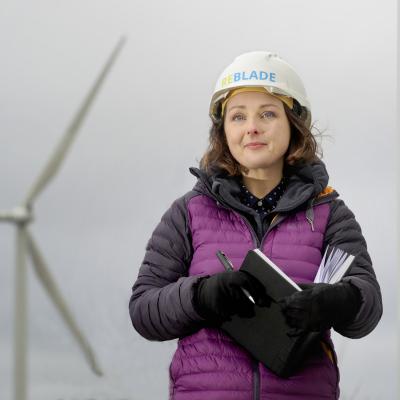
By Fiona Lindsay
Next week I'll be on stage at the Onshore Wind Conference in Edinburgh speaking about why the future of onshore wind depends on how well we deal with its past.
The mood in the sector right now is optimistic, and rightly so. The de-facto ban in England has lifted, Clean Power 2030 is driving real momentum, and the room in Edinburgh will be full of people planning what comes next. But a great deal of what comes next is repowering, and you cannot repower a site until you have taken the first generation down.
The UK has 16GW of onshore wind operating today, six in every ten megawatts of it here in Scotland. More than 200 windfarms across Great Britain face repowering decisions by 2030. That is a wave of decommissioning arriving whether the industry is ready for it or not.
We started Reblade because we could see that wave coming, and because I knew from twenty years in this industry that decommissioning done badly would cost operators dearly, in money, in delay, and in the trust of the communities and regulators they depend on. And that last point is perhaps the most important.
Reblade has been decommissioning sites for years now, and our approach is based around three well defined stages.
Plan. The decisions that most affect the cost, safety and material recovery of a decommissioning project are made years before a single component moves. A robust Decommissioning & Restoration Plan is where that happens, and increasingly, it's what planners want to see before they'll consent a repowering application. There's nothing riskier in this work than an unanswered question, and the plan is where you answer them. A DRP involves surveying a site for what it's really hiding, costing the work honestly, and giving the owner/operator a plan that stands up to scrutiny.
Deliver. Taking down a windfarm is a serious undertaking, hundreds of tonnes of components, thousands of tonnes of stone and concrete, complex lifts in tight weather windows, often on sensitive upland sites. Making that look straightforward is the hard part, and it's earned through methodology, not luck. We design every operation around keeping the site clean and protected, with detailed methodologies that go beyond compliance.
Recover. A windfarm is too good to waste. Steel, copper, concrete and composite all have somewhere better to go than landfill, and we plan every material stream's destination before works begin, with the audit trail an owner needs for ESG reporting. The material the industry has struggled with longest — the blade — is where we've gone furthest. Our BladeBoard® composite planks give retired blades a second working life as structural building material, saving around 480kg of CO₂e for every tonne produced.
None of this is theory for us. It comes from delivering the work on the ground, in real conditions, and feeding everything we learn back into how we plan, cost and de-risk end-of-life for owners and operators.
If you're at the conference, come and hear the full argument during the Supplier Showcase session on Day 1, and afterwards, come and find us at Stand G11. We'll have a live scale-model demonstration, examples of BladeBoard® fencing, and the team who actually deliver this work ready to talk it through.
Repowering the UK starts with decommissioning done right, and I look forward to making that case in Edinburgh.